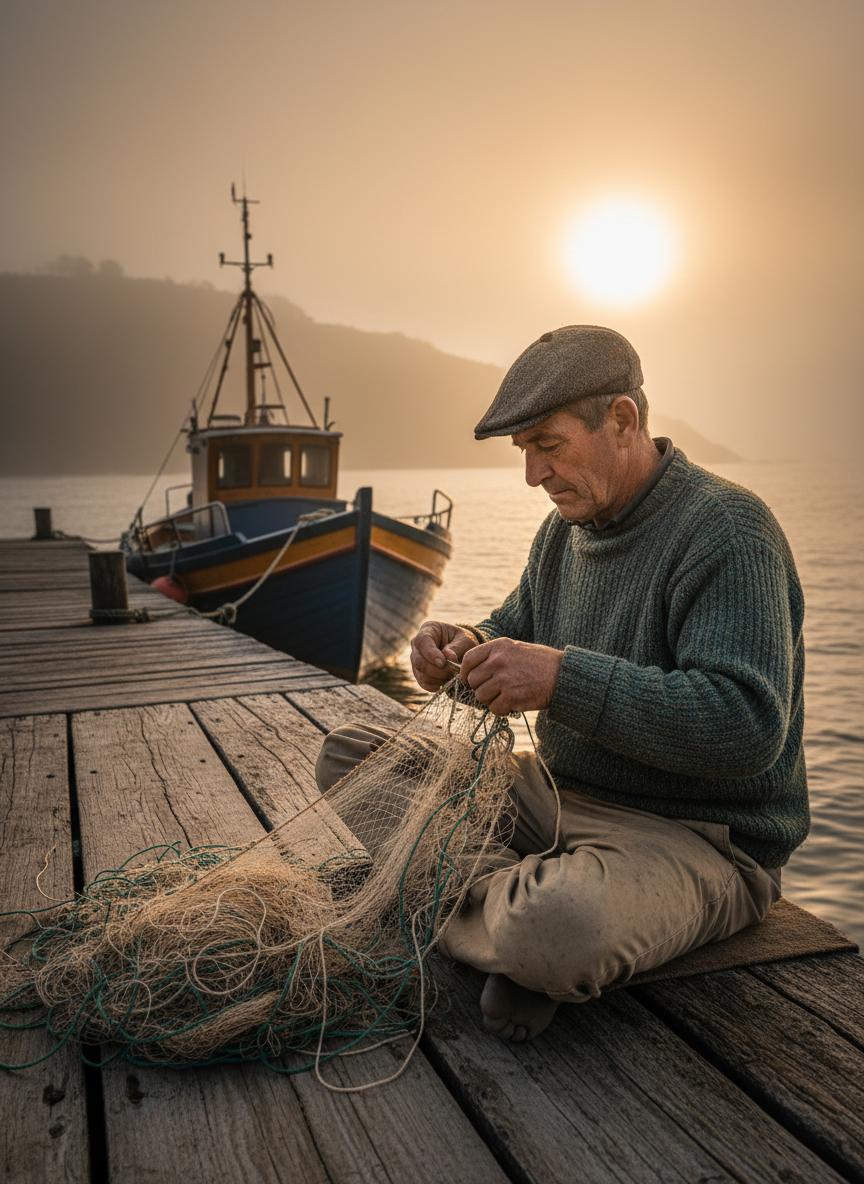
The harbor at Cudillero smells of salt and diesel and the particular sweetness of fresh-caught sardines. It is a smell that Manuel Vazquez has known since before he could walk, a smell that means home in a way no words ever could. At sixty-three, he is the youngest full-time fisherman in a village that once launched a hundred boats each dawn.
I met Manuel at four in the morning on a Tuesday in late August. The sky was still dark, the stars bright and sharp above the Atlantic, and the only sound was the rhythmic creak of wooden hulls against the stone quay. He was loading his boat, the Santa Maria, with nets and ice and the thermos of coffee that his wife Rosa had pressed into his hands before he left the house.
“The sea does not care about your grandfather. The sea cares only about what you bring to it today: your patience, your respect, your willingness to listen.”
We motored out past the breakwater as the first light began to stain the horizon in shades of rose and gold. Manuel did not speak much. He was listening, he told me later, to the water, to the wind, to the birds that circled overhead. These were the signals that told him where the fish were, that guided him to the spots where his father had fished, and his father's father before him. The knowledge was not written down. It was in his hands, in his bones, in the particular tilt of his head as he scanned the surface of the sea.
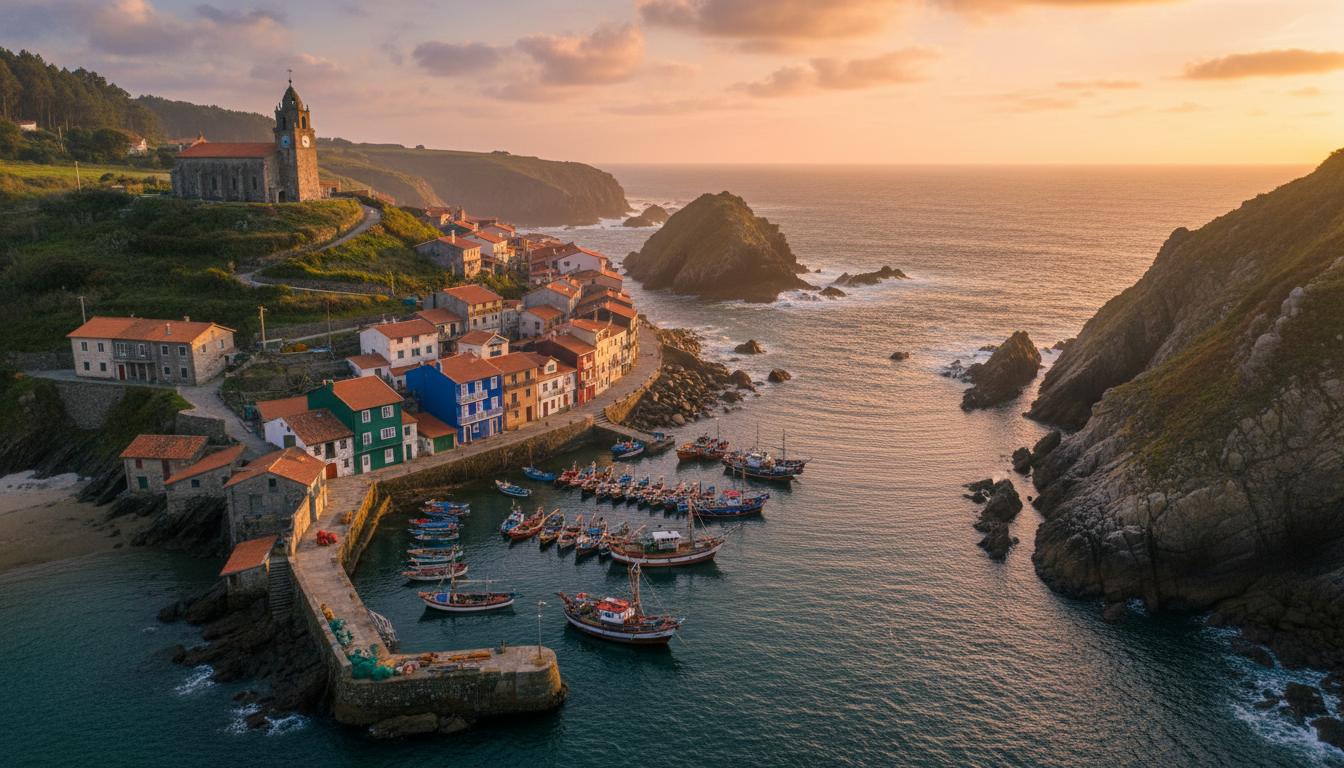
The Galician coast is known as the Costa da Morte, the Coast of Death, a name earned through centuries of shipwrecks and storms and the hard lives of those who make their living from the sea. It is a landscape of dramatic contradictions: sheer granite cliffs that plunge into turquoise water, hidden coves where the Atlantic crashes against ancient rocks, and narrow inlets where fishing villages cling to the hillsides like barnacles to a hull.
But the real drama is happening beneath the surface. Overfishing has decimated the stocks of hake and monkfish that once made Galicia the seafood capital of Europe. Climate change is pushing traditional species northward, replacing them with warm-water invaders that the local market does not want. And the European Union's quotas, designed to save the fisheries, are driving small-scale fishermen out of business while industrial trawlers continue to haul in tons of bycatch.
“My son says he wants to be a programmer. I asked him what a programmer does. He said he will sit in a room and talk to a machine all day. I told him he already talks to reindeer, and at least reindeer talk back.”
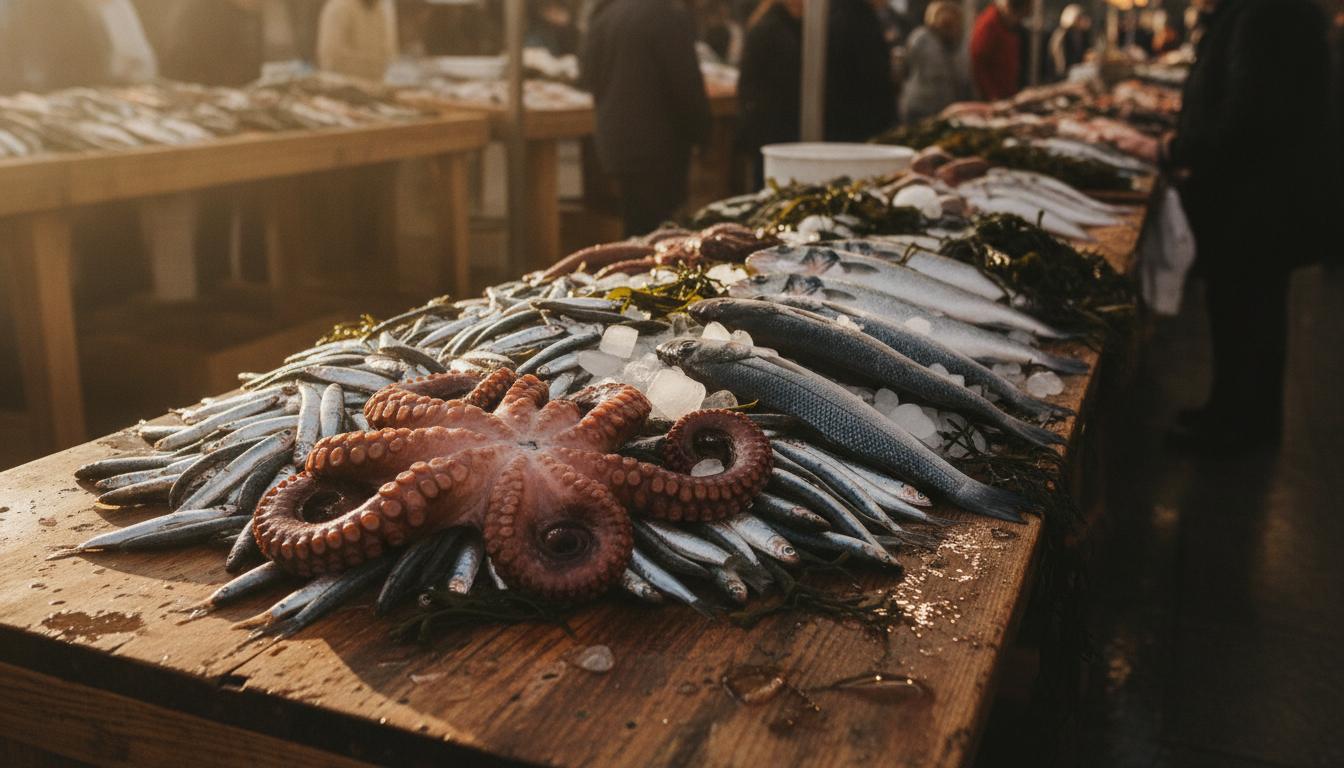
Manuel pulled in his nets as the sun cleared the horizon. The catch was modest: a few kilos of sardines, a couple of octopus, one beautiful sea bass that would fetch a good price at the afternoon market. He shrugged when I asked if it was enough. “It is what the sea gives,” he said. “Some days more, some days less. You do not argue with the sea. You accept, and you return tomorrow.”
Click any image to view the gallery.
What struck me most about Manuel was not his skill as a fisherman, though that was considerable. It was his patience. He moved through his work with a deliberation that seemed almost meditative, each action part of a larger ritual that connected him to something ancient and enduring. When he repaired a torn net, his fingers moved with the same precision his grandmother had used to mend the family's clothes. When he gutted a fish, he did it with a respect that bordered on reverence.
The afternoon found us at the fish market in Lugo, a chaotic, joyous place where fishermen sold their catch directly to restaurants and home cooks. Manuel's sea bass drew a small crowd of admirers, and he accepted their compliments with the gruff modesty that Galicians wear like a badge of honor. But I noticed that he spent more time talking to the older buyers, the ones who remembered when the market overflowed with fish, than to the younger chefs who ordered most of their seafood from industrial distributors.
“They do not understand,” he told me as we walked back to his truck. “They think fish comes from a truck, not from the sea. They think the price is what matters, not the relationship. My grandfather knew every family that bought his fish. He knew their children, their parents, their secrets. That is what we have lost. Not just the fish. The connection.”
On my last morning in Cudillero, Manuel took me to a small chapel above the harbor, dedicated to the Virxe do Carmen, the patron saint of fishermen. The walls were covered with photographs of boats lost at sea, with flowers that had dried and been replaced and dried again, with votive candles that burned day and night. Manuel lit a candle and stood in silence for a long time, his weathered hands folded in front of him, his eyes closed.
When he opened them, he looked at me and said, “People ask me why I still fish. They say I should retire, move to the city, live an easy life. But I am not ready to become a ghost. As long as I can feel the boat beneath my feet and the nets in my hands, I am alive. The sea is my church. This is my prayer.”
I left Galicia the next day, carrying with me the smell of salt and diesel and fresh-caught sardines, and the memory of a man who had taught me that tradition is not the opposite of progress but its foundation. That some things are worth preserving not because they are old, but because they are true. That the sea, for all its cruelty, gives us something the modern world cannot: the chance to be humble, to be patient, to be human.
